
As the war in Ukraine stretches on into its 4th year, the news has covered many aspects of the war. From Putin’s and Zelensky’s speeches, to the damage inflicted on both sides and the emigration crisis on both sides. One more humorous part of the war which has yet to be covered is the combat meme culture in Ukraine – the use of memes and humour even within the formal military.
The combat meme culture in Ukraine is something very unique, especially in a formal military organisation. This unique part of the military has gotten some headlines, but where does this tradition originate from – and how the hell did Kuromi and Hello Kitty become a symbol military officers use as patches on their uniform?
Table of Contents
Where Did Combat Meme Culture in Ukraine Originate From?
Combat meme culture in Ukraine originated even within the early days of the war. People in the military have used depictions of internet memes, symbols and online characters to represent military brigades or just to add decoration patches to their uniform.
Military patches have been used for decades – usually patches will contain symbols from the country the militant is representing (such as the nation’s flag, crest, various symbols), the brigade in which they are a part of, or even patches of status such as awards and achievements from that particular soldier.

Zelensky Repping Kuromi Patch
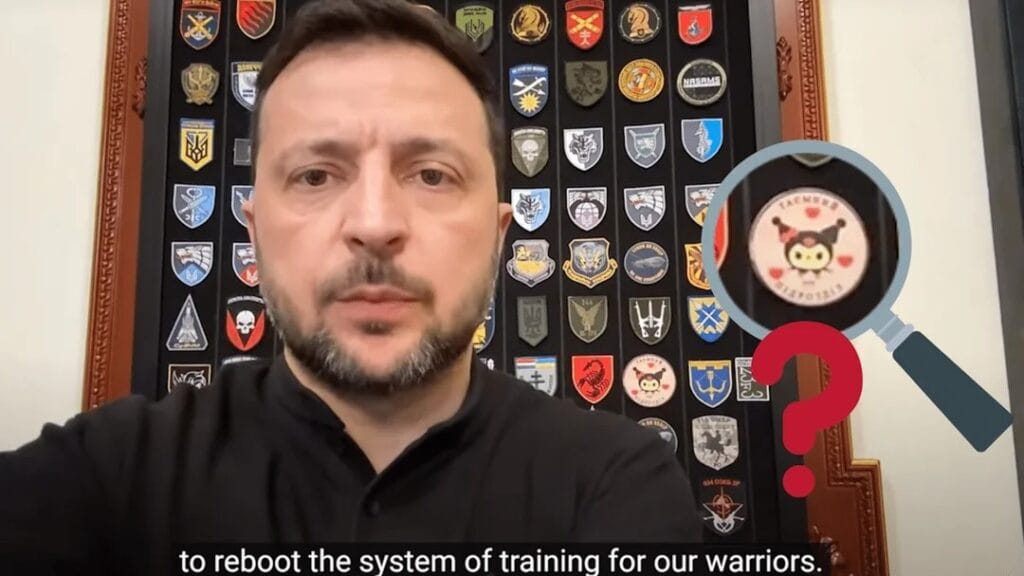
Zelensky went viral last year for an online interview he did posted on his official platforms and Youtube. In the background, many patches from the war were visible – ones of the Ukranian flag and other Ukranian military symbols. However one in particular stirred a lot of online talk – Sanrio’s Kuromi.
The internet world was quite shocked that even the President of Ukraine acknowledged and adorned Ukraine’s meme culture in the form of Sanrio’s Kuromi, a famous Japanese kids cartoon known for being super cute.
The polar nature of these symbols create a humorous picture – the President of a country at war, talking about strategy was doing so in front of a cute children’s cartoon from the other side of the world, often ultra feminized and used on female clothing, items and more.
Symbols Used In Individual Brigades
It is reported that brigades in Ukraine have the option to make their own logo or symbol, allowing for creative freedom. When you visit a military cemetery in Ukraine, you will notice that every grave adorns a Ukrainian flag. This is a must, however you will see many graves also have a secondary flag or symbols also. Many of these symbols are brigades that people were a part of.
While there is not enough information online about specific brigades and their symbols (with some speculating that the Kuromi badge is actually the symbol for a secret unit within the military), it is clear that a deep meme culture in Ukraine is a part of the combat culture.

Keeping Something Very Somber Lighthearted
War is never easy on anyone – a direct combatant, a volunteer, a medivac specialist, a civilian, a journalist – it weighs down everyone in the nation. Within the somberness of war and combat, sometimes symbols of hope and humour emerge to lighten the emotional and physical weight,
Combat meme culture in Ukraine has emerged as a key way in which combatants and supporters can personalise their participation in war and control symbols used. Rather than always reusing the same, violent depictions of drones, military equipment and missiles on patches, some Ukrainians have resorted to online meme culture instead.
This is also a clear indication of the youths’ participation in war. When observing graves at a military cemetery in Ukraine, you will notice many of the volunteer and conscripted combatants were young – some not even 20 years old. Combat meme culture in Ukraine exemplifies the youths’ participation, contributions, and sacrifices to the military and their country.