If you now anything about world of unrecognized countries then you will have regard of South Ossetia. Dejure part of Georgia, but defacto independent, this unrecognized state has been flashpoint for wars between the east and west on more than one accession.
Why though does it exist, who are the Ossetian people and should they be independent? Well the answers to these questions are some what myriad and #Complicated.
Table of Contents
A Brief History of South Ossetia
The region became part of the Russian Empire in the early nineteenth century before ending up within the Georgian Soviet Socialist Republic after the formation of the Soviet Union. In 1922 it was made the South Ossetian Autonomous Oblast, a status it kept throughout the Soviet era. This was to prove somewhat problematic later.
As the USSR started to fall apart, ethnic and political tensions came back to the surface. South Ossetia declared independence in 1990, Georgia obviously refused to recognise, which led to war in 1991 through 1992. A Russian brokered ceasefire largely ended the war, but the region remained in limbo, functioning separately from Georgia while still being recognised internationally as Georgian territory.
For the next sixteen years the conflict remained frozen, with checkpoints, peacekeepers and political wrangling becoming part of daily life, before everything erupted again during the brief but extremely eventful war between Russia, Georgia, South Ossetia and Abkhazia in 2008.
Click to read about the Republics of the USSR.

The 2008 War Between Russia and Georgia
The 2008 Russia Georgia War lasted just five days, but completely changed the region. Fighting began around South Ossetia after escalating clashes between Georgian forces and South Ossetian troops, with Russia rapidly intervening in support of South Ossetia. The region quickly became the main staging ground for Russian operations as troops pushed south through the Roki Tunnel before advancing deep into Georgia proper. Within days Russian forces had taken Gori (link to Pais to travel), Stalin’s hometown, leaving many to wonder if they would continue all the way to Tbilisi, which suddenly seemed a very real possibility.
In the end they stopped short of the capital before a French brokered ceasefire brought the fighting to an end. Politically though, the consequences were enormous. The war effectively cemented South Ossetia’s separation from Georgia, with Russia formally recognising it as an independent state just weeks later. Nicaragua and later Nauru also extended recognition, while Russia argued that Western recognition of Kosovo had created a precedent for such moves AKA the Kosovo precedent. It should be noted that Russia also had a non-related loan to Nauru around this time. They are also not allowed to do this kind of thing without permission from Australia now.
And while the vast majority of the United Nations do not recognize South Ossetia, neither did they recognize China for 21 years. Just saying….
Click to read about Crypto in Georgia.

Who are the Ossetian people?
The Ossetians are not Georgians and, despite living south of the Caucasus Mountains, they have their own language, history and identity. While Georgians speak a Kartvelian language, Ossetians speak an Eastern Iranian language descended from that of the ancient Alans, the horse riding warriors who once dominated much of the Eurasian steppe. The Ossetian homeland is split between North Ossetia, which is part of Russia, and South Ossetia, with families, trade and culture continuing to link the two sides of the mountains.
Unsurprisingly this has meant that many South Ossetians have traditionally looked north towards Russia rather than south to Tbilisi. That it was part of the Georgian SSR, rather than Russia, or its own republic were more a Soviet anomaly than something necessary right for the people. This of course has been seen in places like Nagorno-Karabakh, as well as Transnistria.
Most Ossetians are Orthodox Christians like many Georgians, their customs, language and heritage are distinctly different. These differences, coupled with decades of political tension, explain why the vast morality of South Ossetians see themselves as Ossetian first and foremost, rather than Georgian and are generally pro-Russian.
Click to see our take on the world of unrecognized countries.

So, independence, Russia, or Georgia?
While no one obviously knows what the future holds for South Ossetia and of course YPT have no opinion on these things, we can surmise a few things. Essentially while Georgians, like Argentina with the Falklands see it as an existential matter, the reality that Ossetians do not want to be part of a Georgian state, both north and south of the border.
Therefore the most likely scenario is that the status-quo is just simply maintained and that people go about their business. It also fairly certain that the “border” between Georgia and South Ossetia will remain closed to traffic.
So, can you cross from Gori to South Ossetia?
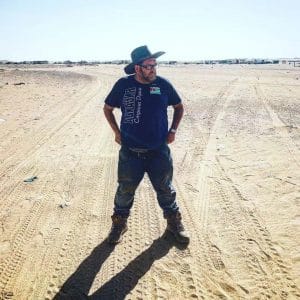
No you cannot! In fact this was something a few of us Pioneers found out the hard way when we ended up heading up there. Here the police surprised that we were there decide to explain that we should leave. We did and they did not nick us, but it was explained that while frozen it is very much still and active war zone (of sorts) – very YPT of us to try though still.
There are though some wineries and cool villages that are kinda near the border, with your almost being able to see Tskhinvali from way out in the distance!
So, should you visit South Ossetia? Well as always that’s on your, even if the visas are on us. We would stay you should though.
Click to see our South Ossetia Tours, and of course Georgia Tours.