
Ghazni is a major city less than 200km south of Kabul and is an excellent candidate for a day trip from the capital! Ghazni has a population of around 200,000 people and is the capital of the Ghazni province. It is also between Kabul and Kandahar, the capital and default administrative capital respectively. But Ghazni is not just a stop in the road, it is the continuation of an ancient empire.

Table of Contents
The History of Ghazni
Sitting along the historic trade routes linking Central Asia, the Indian subcontinent and Persia, it developed into a strategic military, commercial and cultural centre that influenced the history of the wider region.
Although the area had been inhabited since ancient times, Ghazni rose to prominence in the 10th century when it became the capital of the Ghaznavid Empire under Sultan Mahmud of Ghazni. Between 998 and 1030, Mahmud transformed the city into one of the greatest capitals of the Islamic world. From Ghazni, he launched numerous military campaigns into northern India, greatly expanding his empire while bringing immense wealth back to the city. The spoils of these expeditions funded magnificent palaces, mosques, libraries and gardens, attracting renowned scholars, poets and scientists. Among those associated with Mahmud’s court was the Persian poet Ferdowsi, author of the Shahnameh, although his relationship with the sultan was famously strained.
Following Mahmud’s death, the Ghaznavid Empire gradually declined. In 1151, Ghazni was sacked by the Ghurid ruler Ala al-Din Husayn, who earned the nickname “Jahansuz” or “World Burner” for the destruction he inflicted on the city. Although it later recovered to some extent under the Ghurids, Ghazni never regained the political dominance it had enjoyed during the Ghaznavid era.
Over the following centuries, the city changed hands repeatedly. It came under the control of the Khwarazmians before suffering devastation during the Mongol invasions of the 13th century. Later, it formed part of the Timurid Empire, followed by the Mughal Empire, whose founder Babur admired Ghazni and recorded visits there in his memoirs. In the 18th century, the city became part of the emerging Durrani Empire, laying the foundations of modern Afghanistan.
Modern Ghazni History
During the First Anglo-Afghan War, Ghazni again became internationally significant. In 1839, British forces stormed the fortress during the Battle of Ghazni, capturing the city after blowing open one of its gates in a complete victory. In recent decades, Ghazni has witnessed conflict during the Soviet-Afghan War and the post-2001 war, but it remains an important provincial capital. Today, its surviving minarets, archaeological remains and rich cultural legacy stand as reminders of its former status as one of the great cities of the medieval Islamic world.

Places To Visit
Ghazni Citadel
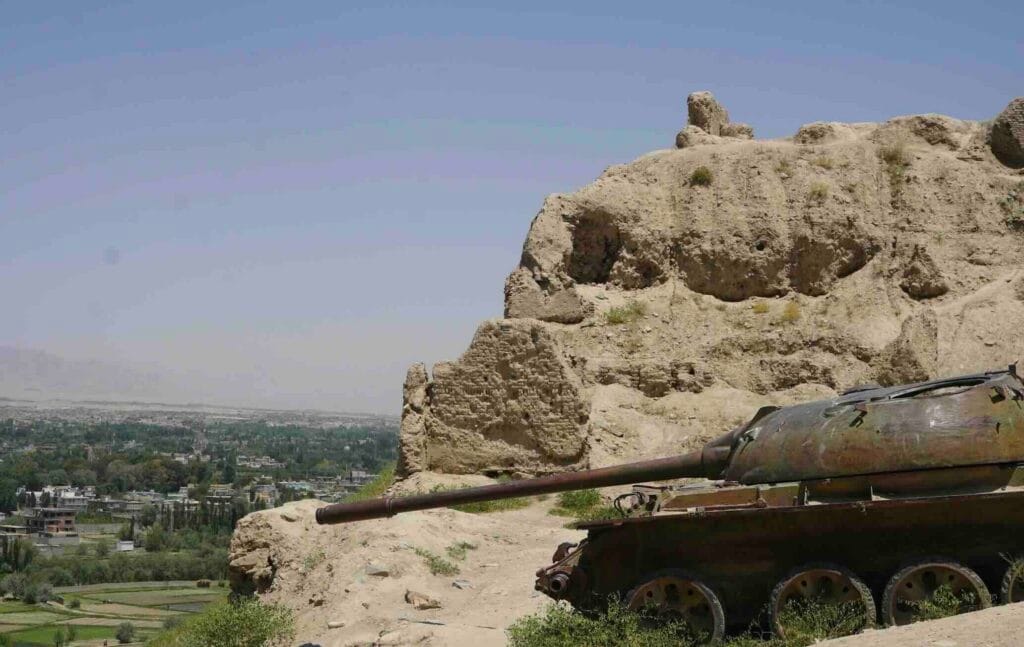
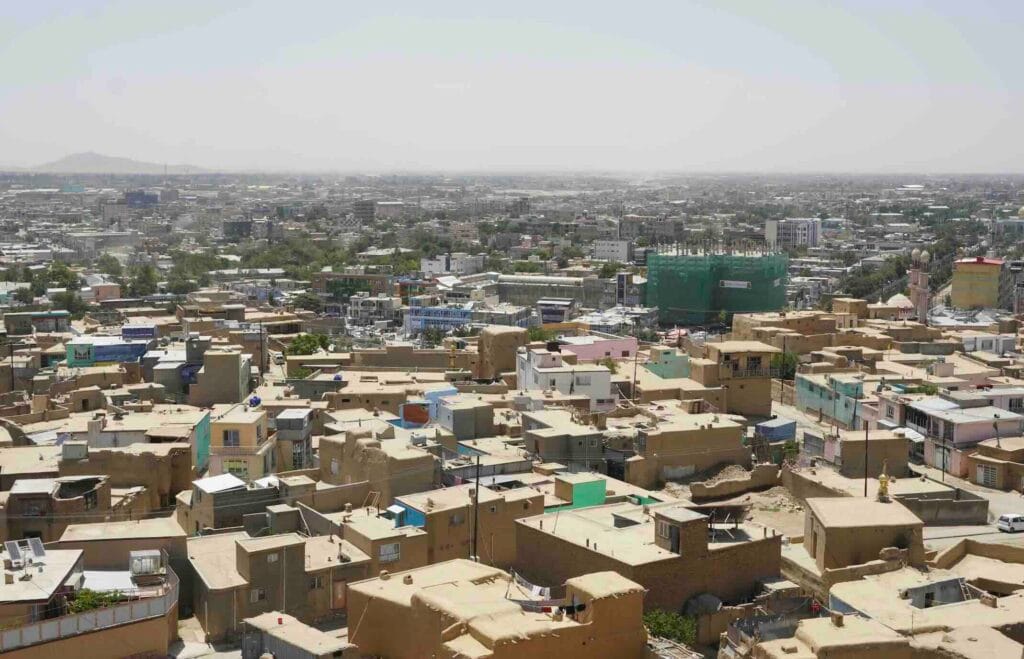
Overlooking the city, the ancient citadel has served as Ghazni’s main defensive fortress for centuries. Although much of the structure has been damaged by successive wars, it still offers excellent views over the city and provides insight into Ghazni’s military history.
Two Minarets
The city’s most famous landmarks are the two surviving Ghaznavid minarets, built during the 12th century by Sultan Mas’ud III and Bahram Shah. Originally standing alongside grand mosques and palaces, they are decorated with intricate geometric brickwork and Kufic inscriptions, showcasing the remarkable craftsmanship of the Ghaznavid Empire.
Open Air Museum
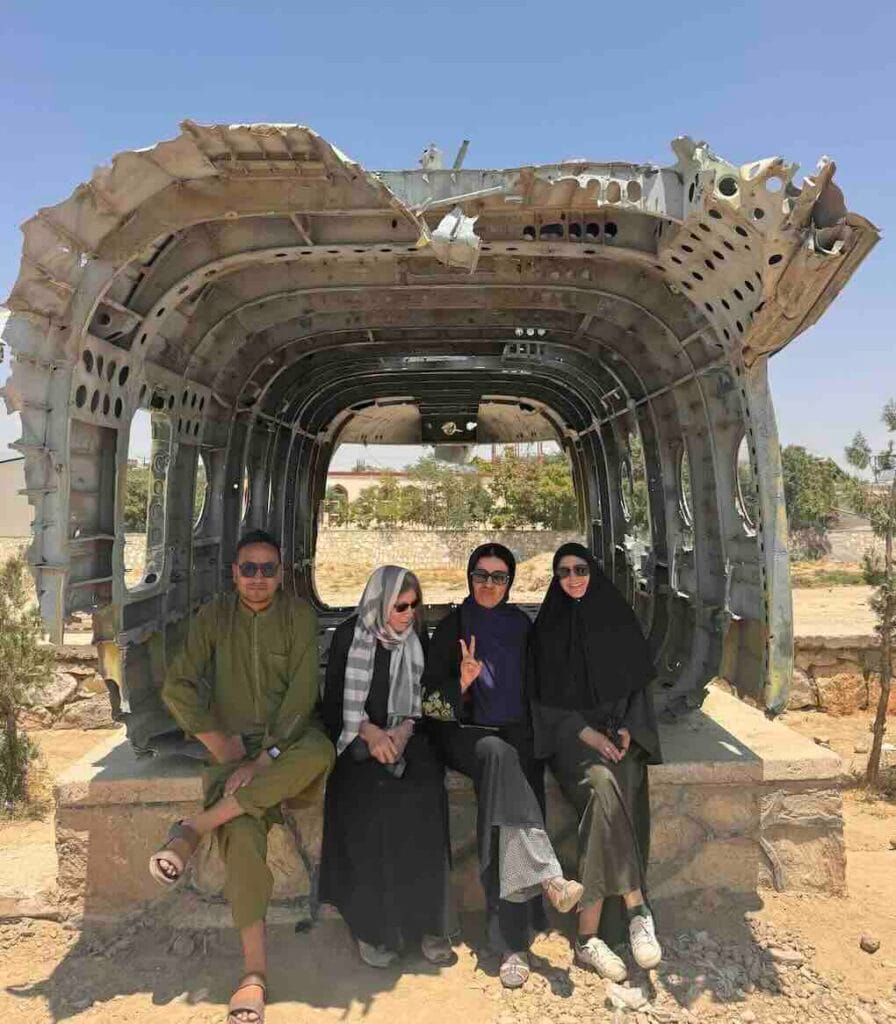
This open air museum has tanks, armory, and even a shelled and hollow helicopter! On the side of one of the major roads, a collection of armory left behind during multiple wars is possible to view, climb on and see up close! The collection represents the history of conflict that took place in and around Ghazni and is a stark reminder of the regions recent troubles.
Tomb Of Mahmud Ghazni
One of Afghanistan’s most important historical sites, this mausoleum is the burial place of Sultan Mahmud (971–1030), founder of the Ghaznavid Empire. The tomb has been rebuilt and restored several times over the centuries, but it remains an important pilgrimage and historical landmark.
You can visit the tomb with many people making a short pilgrimage to his grave for goodluck and fortune.

What Is So Special About Ghazni?
In 2013, Ghazni was named the Islamic Capital of Culture by the Islamic Educational, Scientific and Cultural Organization (ISESCO), recognising its enormous contribution to Islamic civilisation and Persian culture.
Not only its significant contribution to islamic knowledge, but once upon a time Ghazni was ranked with Bgahdad and Bukhara as centers of learning, arts and Persian literature.
The city has also swapped hands many times – having been ruled by the Ghaznavids, Ghurids, Mongols, Timurids, Mughals and Durranis, which has had a significant impact on the city, its culture and peoples.
The city is mixed in terms of its ethnicity – Hazaras, Pashtuns, Tajiks and more.