
When people picture Laos, chances are they are imagining one of three things: saffron-robed monks walking through Luang Prabang at dawn, the slow movement of boats along the Mekong, or the striking blue waters of Kuang Si Waterfalls.
Table of Contents
Located roughly 30 kilometres south of Luang Prabang, the Kuang Si Waterfalls have become one of the country’s most recognisable natural attractions. Yet despite its fame, Kuang Si remains genuinely impressive. Unlike many attractions that struggle under the weight of their own publicity, the falls largely justify the attention. What visitors often miss, however, is that Kuang Si is more than a photogenic swimming spot. It is a geological curiosity, an important conservation site, a place of local significance, and a good example of how tourism has transformed Laos over the past few decades.
Where are the Kuang Si Waterfalls?
The Kuang Si Waterfalls are located a protected forest area in Luang Prabang Province, approximately 45 minutes by road from the UNESCO-listed city of Luang Prabang, one of Southeast Asia’s most historically significant urban centres.
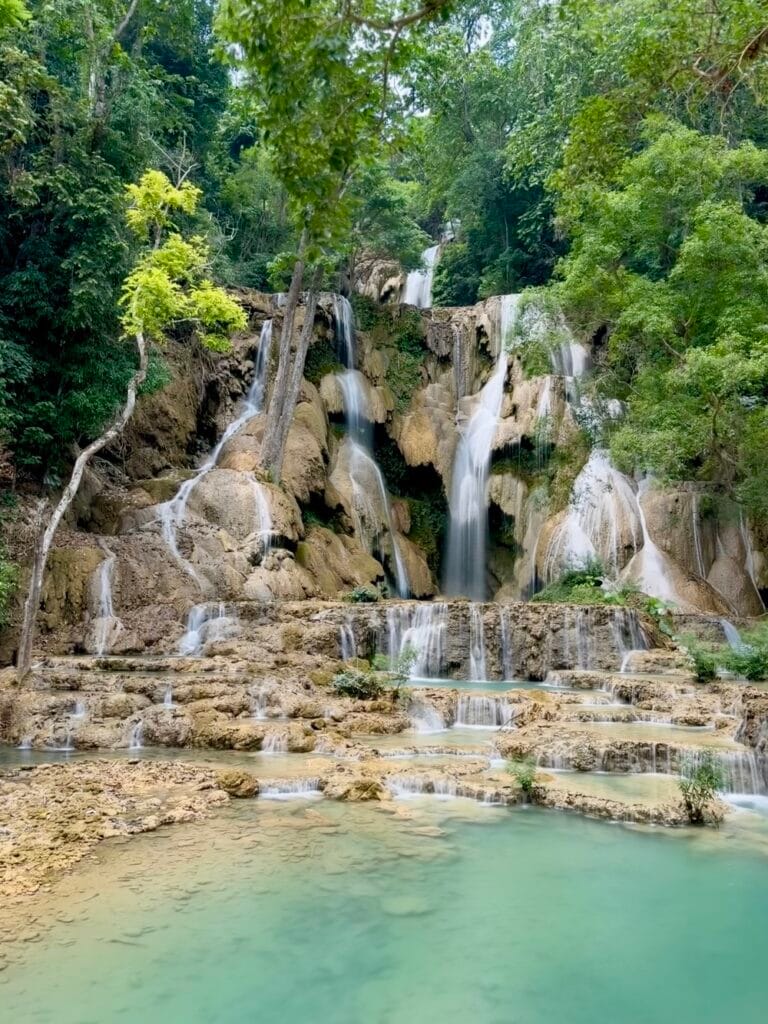
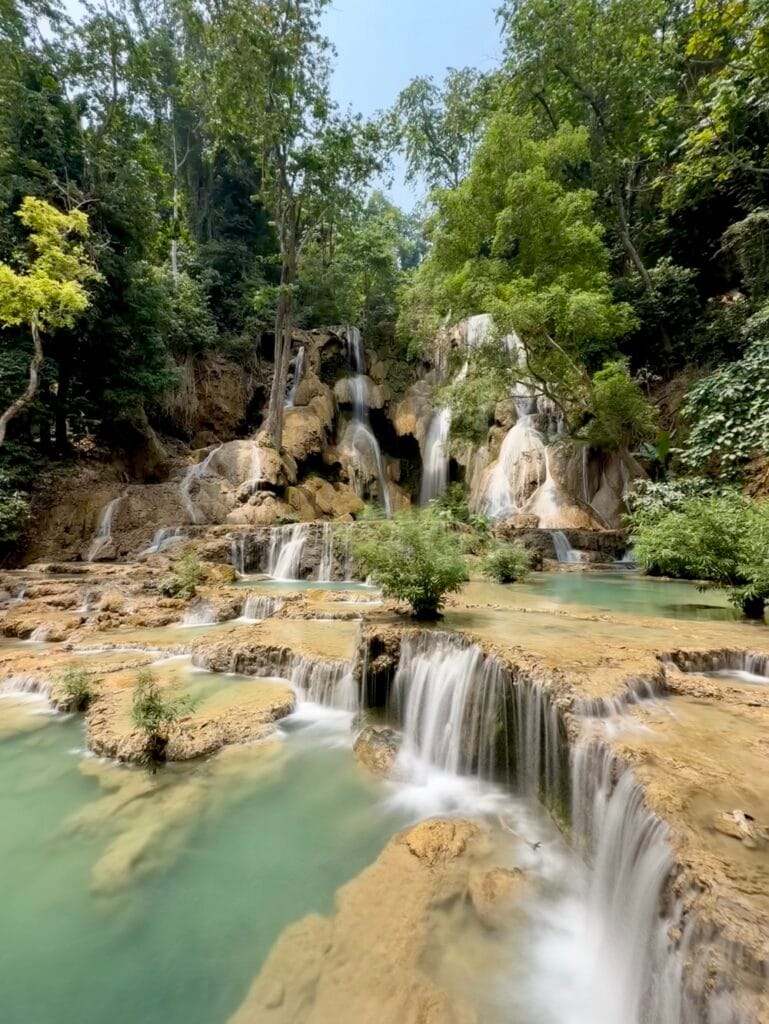
The waterfall system is fed by numerous streams flowing through dense jungle and limestone formations. Water descends through a series of terraces before dropping approximately 60 metres over the main cascade.
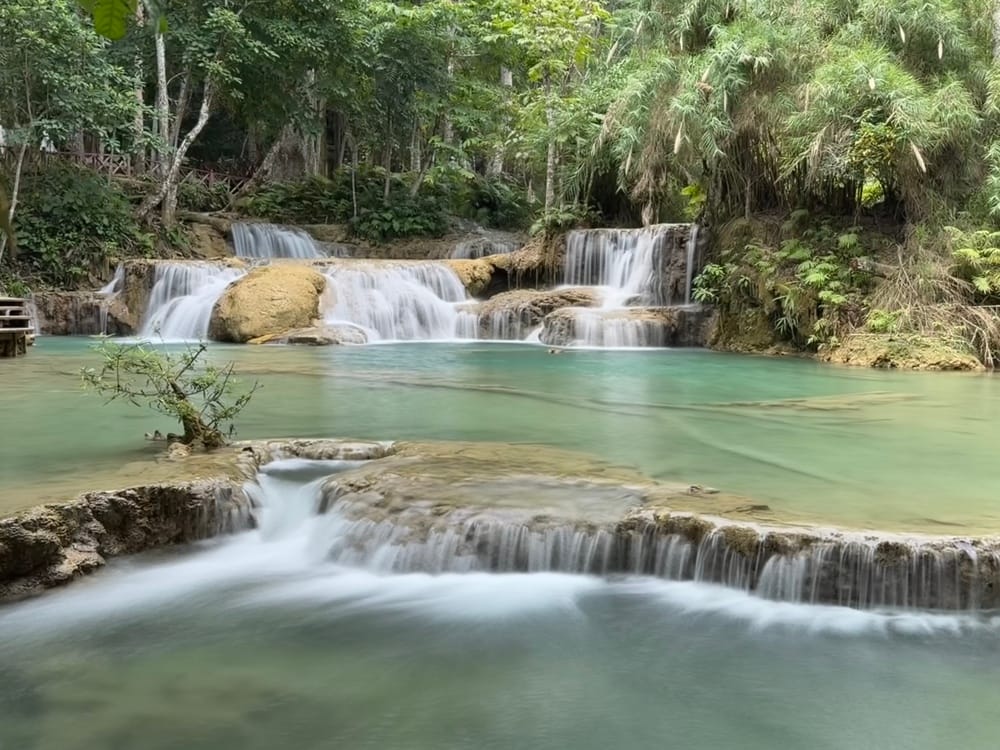
Unlike many waterfalls that consist of a single dramatic plunge, the Kuang Si Waterfalls are a multi-level system. The famous turquoise pools that attract swimmers are actually a series of stepped basins formed over thousands of years through mineral deposition.
The Meaning Behind the Kuang Si Waterfalls Name
Local legend provides several explanations for the waterfall’s origins.
One popular story describes a wise old man who dug into the earth until water emerged from below. A golden deer then made its home beneath a large rock near the falls. According to the legend, the sound of water attracted people from surrounding villages, eventually creating a settlement in the area. The name “Kuang Si” is often linked to this tale. “Kuang” is associated with deer, while “Si” refers to the act of digging. As with many oral traditions in Southeast Asia, multiple interpretations exist, and exact translations vary depending on dialect and source.
Whether historically accurate or not, the legend demonstrates the long-standing cultural significance of the site before it became a destination for international tourism.
The Science Behind the Blue Water
The most distinctive feature of the Kuang Si Waterfalls is its remarkable colour.
Visitors frequently assume the pools are artificially enhanced, digitally altered, or somehow connected to a secret supply of sports drink concentrate. In reality, the colour is entirely natural. The region sits atop limestone-rich geology. As water passes through these formations, it dissolves calcium carbonate and other minerals. These minerals contribute to the formation of travertine terraces while also affecting how light interacts with the water.
The result is a striking blue-green appearance that can range from pale turquoise to deep aquamarine depending on weather conditions, sunlight and seasonal water levels. The same geological processes can be observed in other famous locations around the world, including parts of Croatia’s lakes and Turkey’s travertine formations. Kuang Si represents one of the most accessible examples of this phenomenon in Southeast Asia.
From Remote Waterfall to National Attraction
For much of its history, Kuang Si remained a relatively isolated local site. The transformation began after Laos gradually opened to international tourism during the 1990s. As Luang Prabang emerged as one of Southeast Asia’s most celebrated cultural destinations, visitor numbers increased dramatically.
The designation of Luang Prabang as a UNESCO World Heritage Site in 1995 accelerated this process. Improved roads and tourism infrastructure made day trips to Kuang Si increasingly practical.
Today, the waterfall receives hundreds of thousands of visitors annually. While this popularity brings economic benefits to surrounding communities, it also creates challenges relating to conservation, waste management and environmental protection. Balancing tourism growth with preservation remains a recurring issue throughout Laos, and Kuang Si serves as one of the country’s most visible examples.
The Bear Rescue Centre
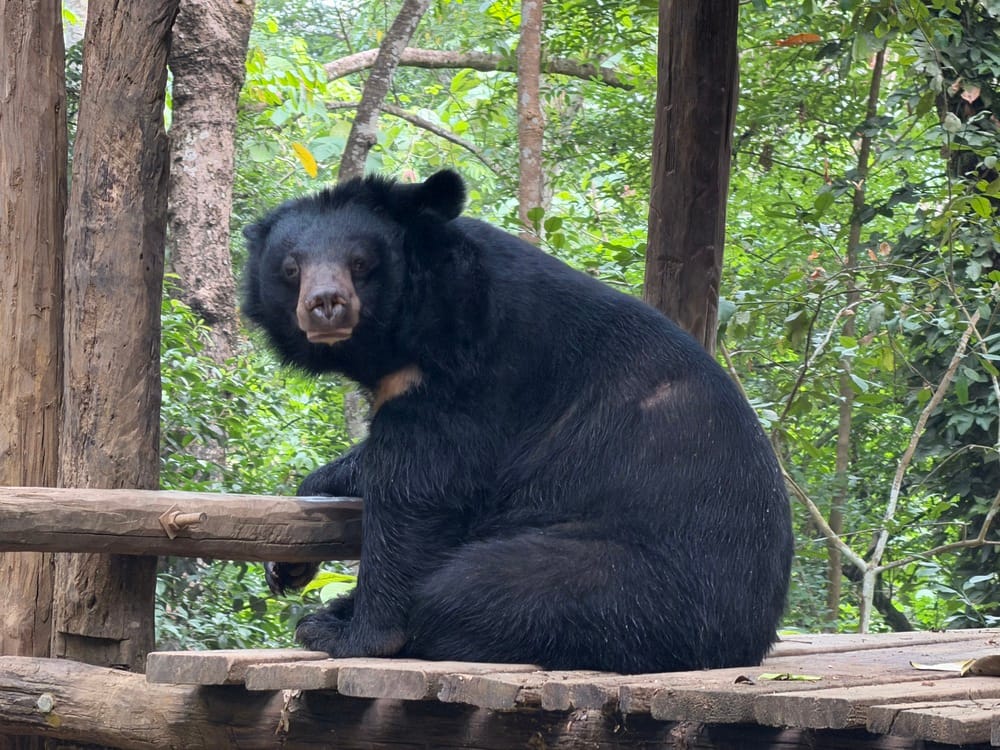
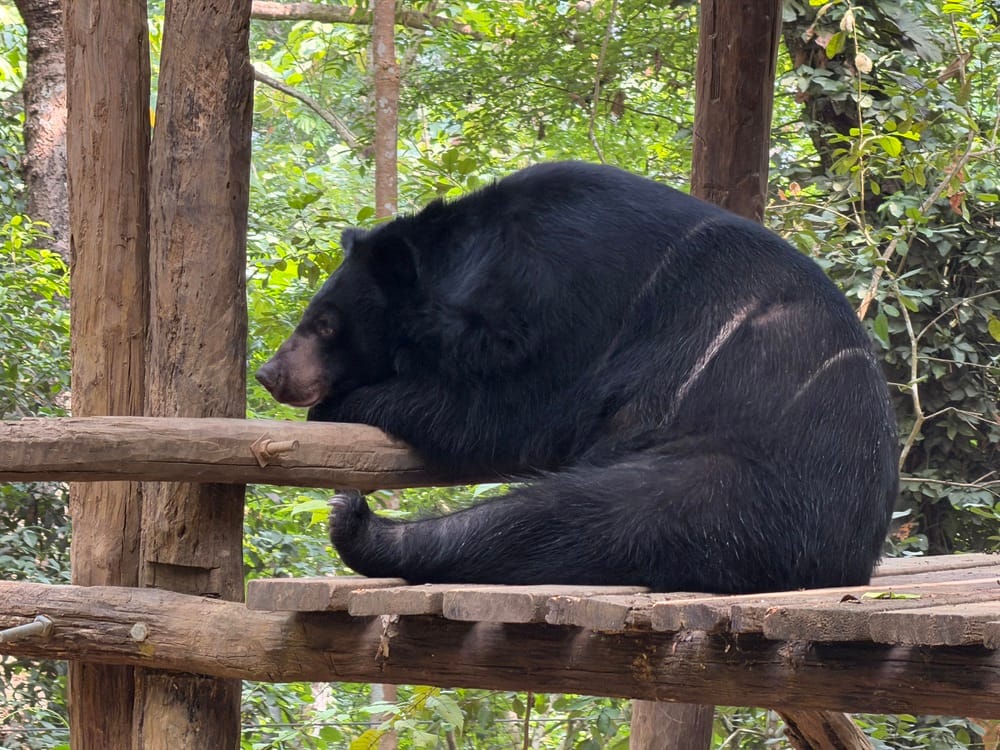
One of the most important features of the site is often overlooked by visitors rushing toward the swimming pools. Near the entrance sits the Tat Kuang Si Bear Rescue Centre, operated in cooperation with wildlife conservation organisations. The facility provides sanctuary for rescued Asiatic black bears, also known as moon bears because of the crescent-shaped marking on their chest.
These bears face significant threats throughout Asia. Illegal wildlife trafficking, habitat loss and exploitation for traditional medicine have contributed to declining populations.
The rescue centre houses animals that have been confiscated from poachers or rescued from illegal captivity. Visitors can observe the bears in large forested enclosures while learning about conservation efforts in Laos.
Exploring the Kuang Si Waterfalls
The visitor experience begins along a network of paths that wind through forest and alongside the lower pools.
Most visitors spend their time around the terraced basins, where designated swimming areas allow access to the famously cool water. Swimming restrictions exist in certain sections to protect fragile formations and maintain water quality.
Further along the trail, the main waterfall comes into view. Water plunges over a broad limestone face surrounded by dense vegetation, creating the dramatic image that appears in countless travel guides.
A steeper trail leads to the top of the falls. While the climb is not particularly long, it can be muddy and slippery, especially during the rainy season. The summit provides views across the surrounding forest and offers a perspective on the scale of the waterfall system that many visitors miss.
Seasonal Changes
Kuang Si looks different throughout the year.
During the dry season, generally between November and April, water levels are lower but the pools often display their clearest colours. This is also peak tourism season, meaning visitors should expect company.
The rainy season transforms the falls into a more powerful spectacle. Increased water volume creates dramatic cascades and stronger currents. The surrounding forest becomes particularly lush, although swimming conditions can be less predictable and some trails more challenging.
Neither season is objectively better. The choice depends largely on whether visitors prioritise swimming, photography or experiencing the waterfall at maximum power.
Tourism and Conservation
The popularity of Kuang Si raises broader questions about sustainable tourism in Laos. Visitor fees contribute to maintenance and local economic development, while tourism creates employment opportunities for nearby communities. At the same time, increased foot traffic places pressure on sensitive ecosystems.
Authorities have implemented various measures to manage these challenges, including designated swimming areas, protected zones and infrastructure improvements designed to minimise environmental impact.
The situation reflects a dilemma faced by many natural attractions worldwide. Complete isolation preserves nature but limits economic opportunities. Unrestricted tourism generates revenue but risks damaging the very environment visitors come to see.
Visiting the Kuang Si Waterfalls with Young Pioneer Tours
Most travellers visit Kuang Si as a straightforward day trip from Luang Prabang, but the waterfall works best when viewed as part of a wider exploration of northern Laos.
The site provides an interesting contrast to the region’s cultural attractions. After days spent exploring Buddhist temples, French colonial architecture and historical sites, Kuang Si offers a reminder that Laos’ appeal extends well beyond its built heritage.
What makes the waterfall memorable is not simply its appearance. Plenty of beautiful waterfalls exist across Southeast Asia. Kuang Si stands out because it combines striking geology, local folklore, wildlife conservation and a tangible example of how modern tourism has reshaped Laos.
Yes, the water really is that blue. No, your camera is not malfunctioning. And despite the crowds, it remains one of the few heavily photographed destinations that still manages to surprise people when they finally see it in person.